WHY IS "HIGH-PRECISION" FORCE CONTROL NECESSARY?
The Force Control
Challenges in
Processes
Invisible Damage ?
High-value or easily deformable components are prone to developing invisible internal micro-cracks or stress under rigid contact. These can only be discovered in subsequent inspection stages and directly impact the yield rate.
Poor Process Consistency ?
Due to the inability to precisely sense the actual contact force in real time, processes like press-fitting are prone to "incomplete insertion" or "over-pressure" situations, leading to batch-to-batch variations in product performance.
Difficult to Improve Production Cycle Time ?
Conventional solutions often struggle to balance high speed with high precision. Ensuring precise force application typically requires sacrificing operating speed, which directly limits the improvement of cycle time (CT) and overall line efficiency.
Complex Equipment integration and commissioning ?
Self-built systems or traditional discrete solutions have complex structures and response delays, significantly increasing the difficulty of integration and programming. This leads to long commissioning cycles and high maintenance costs.
Common Force Control Solutions
Open-loop force control based on the current loop
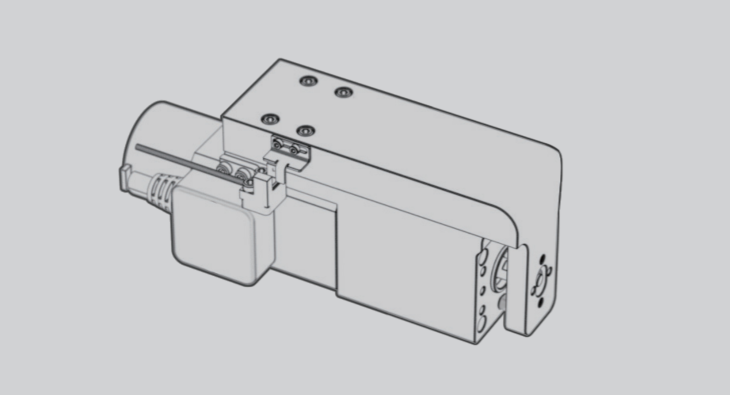
- Typically lacks a force sensor, or the sensor is only used for reading force without participating in control. The output force is controlled by regulating the output current value.
- Force repetition accuracy is generally between ±5% to 15%, suitable for general workpiece processes.
- Unable to precisely control contact force, easily causing impact or over-pressure damage to delicate workpieces.
- Unable to record, trace, or analyze the force control process.
General closed-loop force control with external sensors
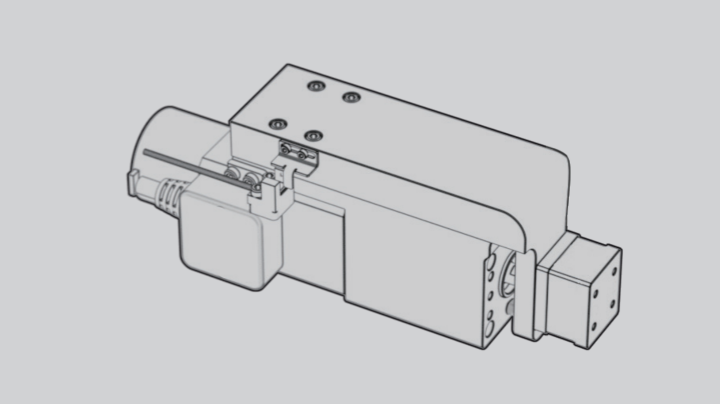
- An external force sensor is added to the actuator's end-effector, and an external controller like a PLC reads the data to form an external closed loop.
- The signal path is long, and inadequate control algorithms can easily lead to response delays.
- Force control accuracy can reach 1%, but response delays make it prone to overshoot, making it difficult to increase speed.
- Complex integration and commissioning, increasing programming and maintenance costs.
- After adding a load, both the magnitude and accuracy of the output force are affected.